Old Town
Cobbled lanes, old churches and inns, and the busiest nightlife in the city.
- Metro
- Piața Unirii (M1, M2, M3) · Universitate (M2)
An independent city guide · Bucharest, Romania
Come on, let's go. It sounds like “hi”, but it's an invitation. Belle Époque streets, communist megastructures and parks the size of neighbourhoods, explained by people who live here.
Itineraries
Each day groups places that are close together and open on the same days, with rough times so you can pace it. Prefer something else? Every stop has a nearby alternative.
Heads up: many museums close on Mondays, including the Antipa Museum, the Arc de Triomphe, the Ceaușescu Mansion and Cotroceni Palace. The Museum of the Romanian Peasant also closes on Tuesdays. On a Monday, pick the Palace of the Parliament, the Village Museum or the parks.
Things to do
Map
Neighborhoods
Where to go for what, and how to get there. Tap a place to see it on the map. Choosing a base? See where to stay.
Cobbled lanes, old churches and inns, and the busiest nightlife in the city.
The grand old avenue, lined with palaces, museums and the Athenaeum.
A wide, green boulevard with three museums side by side and the Arc de Triomphe at the end.
Villas from the Little Paris years, the presidential palace and the Botanical Garden.
Leafy streets, embassies, cafés and some of the city's best restaurants.
Lakeside terraces, the city's biggest park and the Village Museum.
What to eat
Romanian food is hearty, sour-creamy and built for cold winters. Here is what to try, and how to say it.
 Must try
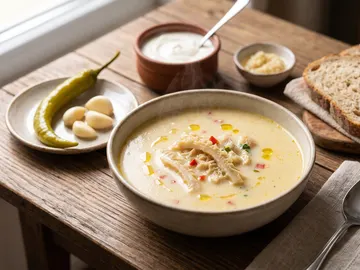
Tripe soup, soured with vinegar, finished with garlic and sour cream. Locals swear by it after a night out.
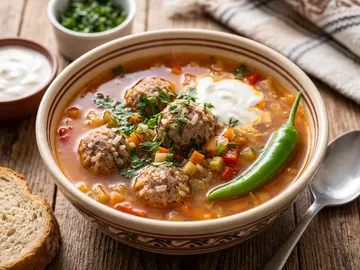
Sour meatball soup with vegetables and lovage. The safe first ciorbă if tripe sounds like too much.
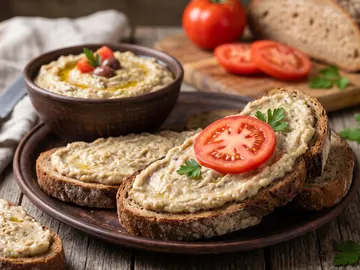
Smoky roasted aubergine spread with onion. Eaten on bread, usually with a slice of tomato.
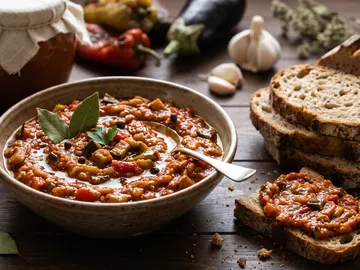
Roasted pepper and aubergine spread, made in every family's kitchen each autumn.
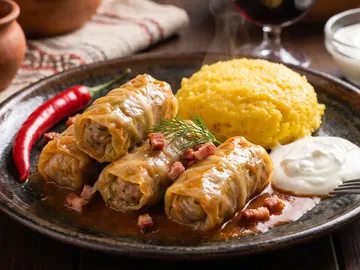 Must try
Cabbage rolls stuffed with pork and rice, slow-cooked and served with polenta and sour cream. The national dish.
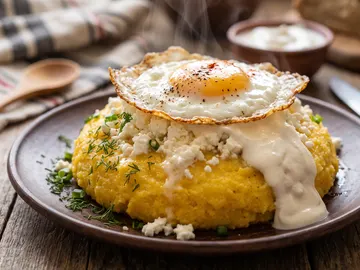
Polenta with salty sheep's cheese and sour cream, often with a fried egg on top.
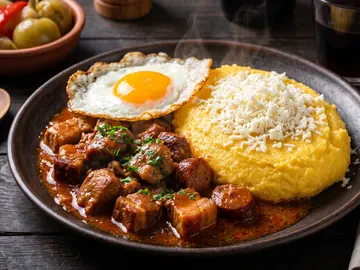
Pan-fried pork in a garlicky sauce, with polenta, cheese and an egg. A full plate.
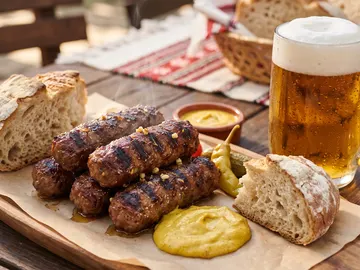 Must try
Grilled skinless sausages of mixed meat, with mustard, bread and a cold beer. Best at a market or a garden terrace.
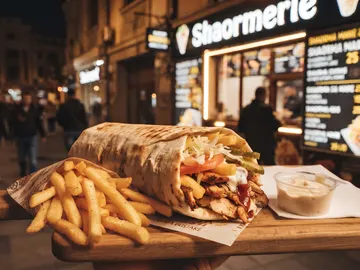
Bucharest's late-night food: a wrap with chicken or beef, fries, cabbage salad and garlic sauce, all inside.
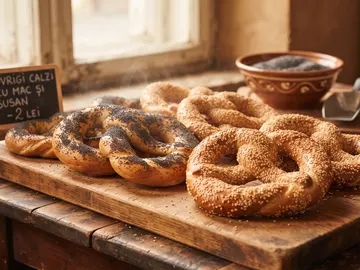
Warm pretzel rings with poppy or sesame seeds, sold from small bakery windows near metro stations.
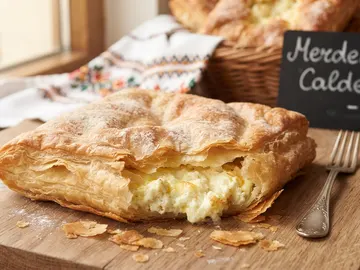
Flaky pastry filled with salty cheese, a Bucharest classic. Grab one warm from a bakery for breakfast.
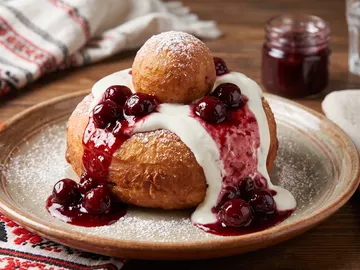 Must try
Fried cheese doughnuts with sour cream and sour cherry jam. Big enough to share, though nobody does.
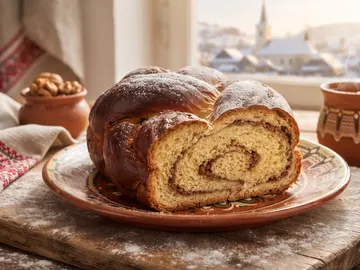
Sweet bread swirled with walnuts and cocoa, baked for Christmas and Easter.
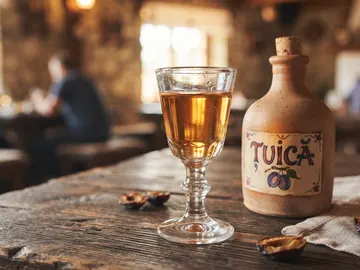
Plum brandy, served in a small glass as an aperitif. Go slowly.
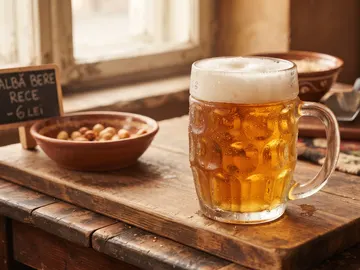
Romanian brands on every menu: Ursus, Timișoreana, Ciuc, Silva and Bucur. For craft beer, look for Zăganu, from Prahova county, Ground Zero, brewed in Bucharest, and Hop Hooligans, from just outside the city.
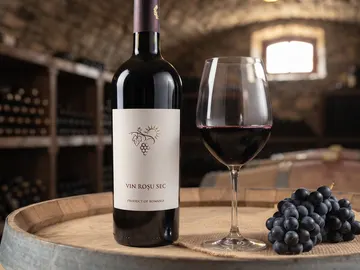
Romania's own red grape. Ask for it by name at any wine bar.
Good to know: portions are large and sour cream comes with almost everything. Tipping around 10% is normal in restaurants.
Plan your trip
Usually the easiest option with luggage. Book in an app such as Bolt or Uber.
Direct, about 25 minutes. Pay by card on board, then change to metro M1 or M4.
Express bus to the centre and the Old Town, day and night.
TemporaryRidesharing and bus 100 pick up at Departures, not Arrivals, while the airport works go on. Map, prices and all the details →
It shows metro, bus and tram connections across the city, with stops and timetables. Pick "Public transport" in directions.
Questions visitors ask
Yes, very. The US State Department puts Romania at Level 1, its safest travel advisory, alongside Switzerland and Austria. On Numbeo's 2024 ranking, Bucharest came out safer than Lisbon, Vienna and London. Walking around at night is completely normal.
For getting around, a ridesharing app such as Bolt or Uber is simply easier than a taxi: the price is fixed upfront, you pay in the app and there's no language barrier. Most taxi drivers are honest, but with an app you never have to wonder.
Two or three days are enough to see the city without rushing. Add a day if you want a trip to Sinaia or Brașov. Our 1, 2 and 3-day routes show how to fit it all in.
No, it's one of the cheaper capitals in the EU. Typical prices: a cappuccino around 17 lei, a draught beer around 18 lei, a meal in a simple restaurant around 70 lei and a metro ride 5 lei (1 euro is a little over 5 lei). Source: Numbeo, October 2026.
Not usually. Romania uses the leu (RON). Cards and phones work almost everywhere, and if a card machine offers to charge you in your home currency, choose RON: it's almost always cheaper. More in our practical guide.
Yes, especially younger people and anyone working with visitors, in hotels, restaurants and shops. A few words of Romanian still go a long way: here are 16 useful phrases.
The city's water company says tap water is drinkable. Older buildings can have old pipes, so many locals still buy bottled water.
Just tap your contactless bank card or phone at the metro gate, or on the validator when you board a bus, tram or trolleybus. No ticket to buy, no app to install. A metro ride costs 5 lei. Rechargeable travel cards also exist, but you won't need one if you have a card or phone. To find the right line, use Google Maps directions with "Public transport".
Bran Castle, the one sold as Dracula's, is about 190 km away, roughly 3 hours by car. Without a car, take the train to Brașov, then a bus or a ride to Bran, about an hour more. It makes a long day, so many people combine it with Brașov: see our Sinaia & Brașov guide.
Yes. Romania has been a full Schengen member since 1 January 2025, so there are no routine passport checks when you arrive from another Schengen country. Visa rules depend on your nationality, so check them for your own passport before you travel.
May and September: warm, sunny and not too hot. July and August often go above 30°C, and winters are cold. See the weather month by month.
Around Calea Victoriei or Piața Romană is the easiest all-round base: central, walkable and quieter than the Old Town. Compare the areas in our where to stay guide.
Yes. Malls are open every day, usually 10:00–22:00, and most shops and supermarkets in the city open on Sundays too.
See our events page for what's coming up and the festivals that return every year. For concerts, the Romanian Athenaeum and the National Opera publish their programmes online.
Guides
What's on
16–25 October · Theatres across the city
Romania's main theatre festival, with ten days of plays. Most performances are in Romanian.
23 October – 1 November · Elvire Popesco, Peasant Museum, MNAR and Apollo111 cinemas
Ten days of films from this year's Cannes festival, before most of them reach regular cinemas.
27 November – 27 December · Piața Constituției
Wooden stalls, mulled wine and festive lights in front of the Palace of the Parliament. Open daily 10:00–23:00; the lights go on at 19:00 on opening night.
1 December · Arcul de Triumf
Romania's national day, traditionally marked with a military parade through the Arc de Triomphe in the morning.
2–6 December · Romexpo, Pavilion B2
One of Romania's biggest book fairs. Free entry, daily 10:00–20:00.